Tuesday, July 31, 2007


Thursday, July 19, 2007
Are these the last days of the Oil Age?
Oil ruled the 20th century; the shortage of oil will rule the 21st.
Last Tuesday the lead story in The Financial Times was the latest report
from the International Energy Agency. The FT quoted the IEA as saying:
“Oil looks extremely tight in five years’ time,” and that there are
“prospects of even tighter natural gas markets at the turn of the decade”.
For an international agency, that is inflammatory language. This steep rise
in the oil price over a four-year period has been caused by demand rising at
more than 2 per cent a year, while supplies had risen more slowly, by a
healthy 4.1 per cent in 2004, but by only 1.25 per cent in 2005 and 0.5 per
cent in 2006.
Read on...
Powered by ScribeFire.
Friday, July 13, 2007
600,000 barrels more oil a day required for 2008
The IEA recently forecast that demand would rise by an
average of 2.2% a year until 2012, raising fresh concerns about whether
supply would be able to keep pace.
http://news.bbc.co.uk/1/hi/business/6897097.stm
average of 2.2% a year until 2012, raising fresh concerns about whether
supply would be able to keep pace.
http://news.bbc.co.uk/1/hi/business/6897097.stm
Powered by ScribeFire.
Wednesday, July 11, 2007

Monday, July 09, 2007
Thursday, July 05, 2007
House starts plunge by 60pc
Figures show that builders registered plans to build only 3,000 new homes last
month - a 60pc drop on the record 7,900 recorded in June last year.
http://www.independent.ie/national-news/house-starts-plunge-by-60pc-955825.html
month - a 60pc drop on the record 7,900 recorded in June last year.
http://www.independent.ie/national-news/house-starts-plunge-by-60pc-955825.html
Powered by ScribeFire.
Daft Q2 Property Report
Sections of interest from the report...
housing markets any time soon and that the rally in asking prices we’re
currently seeing will not last.
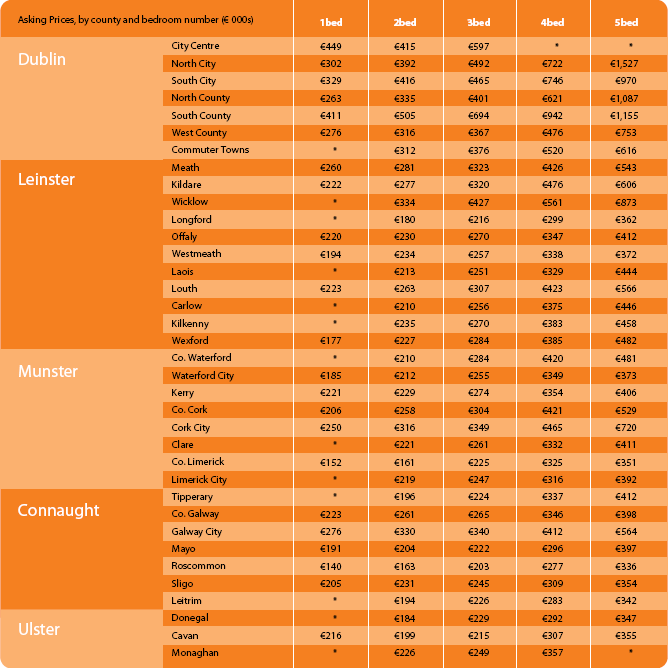
Report is available here
- The average price of a second-hand property in Ireland declined by 1.6% during the second quarter of 2007. This suggests an annual fall of 2.7% since January 2007 – in line with forecasts for the entire year.
- Some anxiety prior to the elections (fuelled by speculations concerning the stamp duty reform) undoubtedly held back a handful of potential buyers. Yet there is little evidence that this had much of an impact on prices. It is more likely that a rush to sell investment properties, driven primarily by rising interest rates and fears of price depreciation, have created a glut of excess supply at the time of falling demand.
- The core issue here is affordability. Basic estimates suggest that the median per capita disposable income in the country today stands at around €31,300 per annum. Factoring in the savings rates and using a 4.5:1 ratio of disposable income to loan value, a median household entering the market today can afford a mortgage of between €380,000 and
€400,000. The stamp duty, legal fees and costs of moving the household and upgrading properties cut roughly 15 percent from the affordability threshold.
- This is a far cry from the latest asking prices – according to Daft’s statistics, the average family dwelling in Dublin city ranges from €485,000 to €518,000 for a three bed and from €671,000 to €734,000 for a four bed property.
- Outside Ireland's cities, though, it is Wicklow which remains the most expensive location in the country, with five bedroom properties outside the main towns in the county averaging €828,000.
- Cork's towns contains some of Munster's most expensive properties, with the average price for five-bedroom properties as follows Clonakilty €552,203, Bantry €492,333
housing markets any time soon and that the rally in asking prices we’re
currently seeing will not last.
Report is available here
Subscribe to:
Posts (Atom)
